Concept: A Functional Kitchen Design Built Around Measurements
This kitchen is not just visually appealing—it’s a fully engineered layout where every centimeter supports workflow, storage, and social interaction. In modern kitchen design, especially in the U.S. mid-range and premium сегменте, success is defined by how well proportions and ergonomics are resolved.
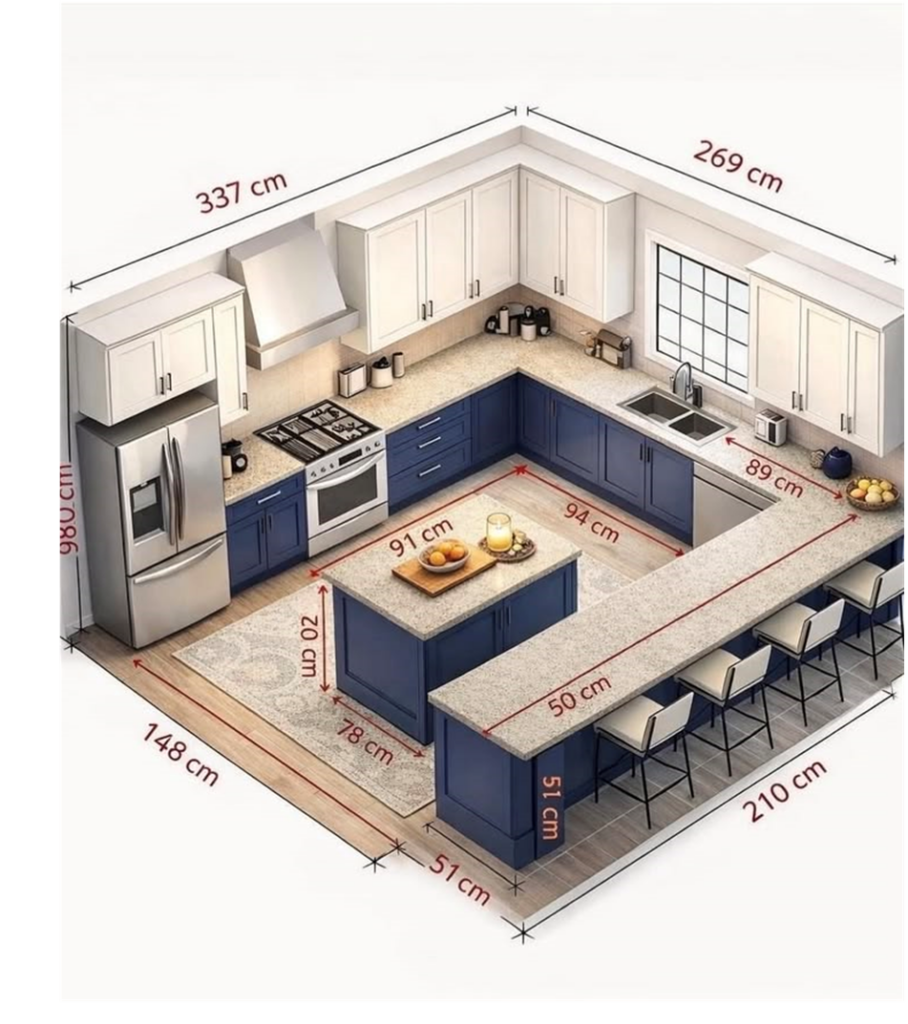
The plan you provided shows a U-shaped kitchen with island + seating, which is one of the most efficient configurations for a kitchen remodel in medium-size spaces.
Layout Breakdown: Why This Kitchen Works
U-Shape + Island Hybrid
This layout combines:
- U-shaped perimeter → maximum storage + continuous work surface
- Central island → prep, serving, and social zone
- Extended peninsula/bar → seating for 4–5 people
From a designer’s perspective, this is a high-efficiency layout because it supports multiple users simultaneously without congestion.
Dimensions Analysis (Based on Your Plan)
Let’s break down the key numbers and how they compare to professional standards.
1. Circulation Space (Critical for Function)
- Your plan shows ~91–94 cm clearance
- Recommended: 91–107 cm minimum for comfortable movement
👉 This means the layout is correctly engineered for one cook and still workable for two.
2. Kitchen Island Size
From the drawing:
- Length ≈ 91 cm
- Width ≈ 78 cm
Professional standards:
- Minimum: 120 × 60 cm
- Typical: 150–210 cm length
👉 Conclusion:
- This is a compact island, optimized for prep—not for seating
- That’s why seating is moved to the peninsula (smart decision)
3. Seating Zone (Peninsula Bar)
- Length ≈ 210 cm
- Depth ≈ 50 cm
Ergonomic rules:
- ~60 cm per person seating width
- Overhang for comfort: 25–30 cm minimum
👉 This design comfortably fits 3–4 seats, possibly 5 with tight spacing.
4. Counter Depth and Work Surface
- Standard depth: ~60 cm
Your plan follows this exactly, which ensures:
- proper appliance integration
- comfortable prep space
Work Triangle: Professional Efficiency
The layout respects the classic kitchen work triangle:
- Fridge → stove → sink distances
- Recommended range: 1.2–2.7 m per side
👉 This ensures:
- minimal unnecessary movement
- faster cooking workflow
- better usability in daily life
How This Fits into a Full Home Remodel
This kitchen is a strong foundation for a larger home remodel, especially when paired with consistent materials across spaces.
Kitchen + Bathroom Strategy
In modern projects:
- cabinetry tones (white + navy here) often repeat in bathroom remodel
- countertops match across kitchen and bath remodeling
- hardware finishes (chrome, brass) stay consistent
This creates a unified interior design language, which is critical for resale value.
Kitchen Renovation Costs (Realistic U.S. Estimate)
For a layout like this:
Mid-range kitchen remodel costs
- $30,000 – $55,000
Cost drivers:
- Cabinets (largest share)
- Island construction
- Countertops
- Labor and installation
Adding features like:
- waterfall island
- built-in appliances
- custom cabinetry
…can push this into $60,000+ range.
Design Strengths of This Kitchen
✔ Excellent circulation planning
✔ Separation of prep vs seating zones
✔ Efficient use of compact island
✔ Strong balance between function and social use
Common Mistakes to Avoid in Similar Projects
❌ Oversized island (kills movement flow)
❌ Too little clearance (<90 cm)
❌ Trying to combine seating + prep on a small island
❌ Ignoring ergonomic rules
How I Would Improve This Design (Designer Perspective)
If this were a real client project, I would:
- extend island to 120 cm+ for better usability
- add integrated lighting above island
- increase seating overhang for comfort
- consider two-tone materials (wood + painted cabinets)
Final Takeaway
This kitchen succeeds because it follows a clear professional formula:
👉 Correct dimensions + clear zoning + ergonomic flow
It’s not just a layout—it’s a system that supports real daily use.
For anyone planning a:
- kitchen remodel
- bath remodeling project
- or full home remodel
This type of measured, logic-driven approach is exactly what separates average results from high-performing design.
Leave a Reply
You must be logged in to post a comment.